
What Is A Dry Trap Tundish?
Complete Guide To Boiler PRV And Unvented Hot Water Heater (T)PRV Dsicharge
A dry trap tundish is a plumbing device used to safely discharge water from boiler and unvented cylinder Temperature Pressure Relief Valve (T)PRV into a local waste pipe while preventing foul odours from entering the building.
Traditional (T)PRV discharges were normally run in pipework to outside the building. However, in many modern installations (houses with landlocked boilers or unvented water heaters), and especially in high-rise dwellings and offices, this can be difficult or impractical to achieve easily.
Using a dry trap tundish allows the relief valve discharge to connect directly to a nearby waste or soil pipe while maintaining compliance with UK Water Regulations and preventing contamination risks.
A standard tundish has no means of preventing foul odours if the PRV discharge is connected to a drain. The dry trap tundish solves this in one product.
The hotun was the original dry trap tundish invented and patented in 2014 by professional plumber Russell Armstrong to solve this installation dilemma.
Why Relief Valves Need Safe Discharge
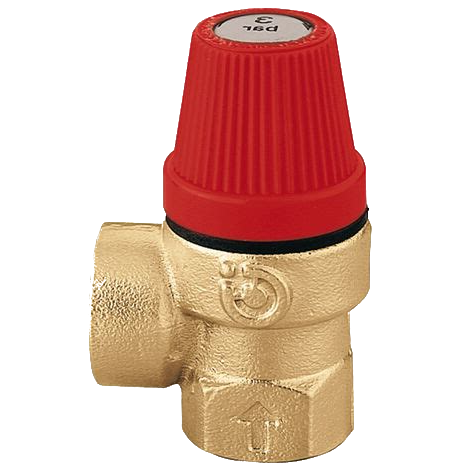
Boilers and unvented hot water cylinders are fitted with Temperature and Pressure Relief Valves (T)PRV to protect the appliance and system from excessive pressure or temperature.
When a relief valve operates, and because the water can be at very high temperatures, the Building and Water Regulations require the “D2” waste water to be discharged in a “safe and conspicuous manner not being a danger to persons in or about the building” in a way that:
-
Allows the discharge to be clearly visible
-
Prevents contamination of the drinking water supply, protecting against back flow and back siphonage
-
Prevents foul air from entering the building
-
Complies with G3 Building Regulations and Water Regulations
Traditional (T)PRV arrangements, for boilers discharged to the outside of the building, would normally be via copper pipework. Whereas, for unvented hot water cylinders, they used a tundish to provide the visibility internally, and then were routed to outside, also in copper pipework, but this was very expensive and time consuming.
Many installations now require a safe way to connect this discharge to a local, internal waste pipe. This internal connection also saves the installer and homeowner time and therefore offers a cost-saving alternative solution.
Why Wet Traps Cannot Be Used
Historically the (T)PRV discharge from hot water cylinders, after the traditional tundish, would have needed to be routed to discharge safely outside of the building. This is, by its very nature an expensive and time-consuming installation option and an alternative solution was developed using a membrane trap.
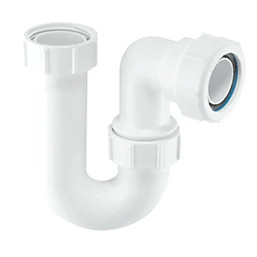
At that time, the only other solution would have been to connect a tundish discharge into a waste pipe using a conventional wet trap.
However this was not permitted.
Relief valves operate only very occasionally, which means the water in a wet trap could eventually evaporate. If the trap dries out, foul odours from the drainage system can enter the building.
Because of this risk, wet traps are not suitable for (T)PRV discharge applications.
The Dry Trap Tundish Solution
A dry trap tundish prevents foul air from entering the building without relying on a traditional water seal. Unlike a wet trap, it does not dry out over time, making it suitable for the infrequent discharge; typical of boiler and unvented cylinder (T)/PRV
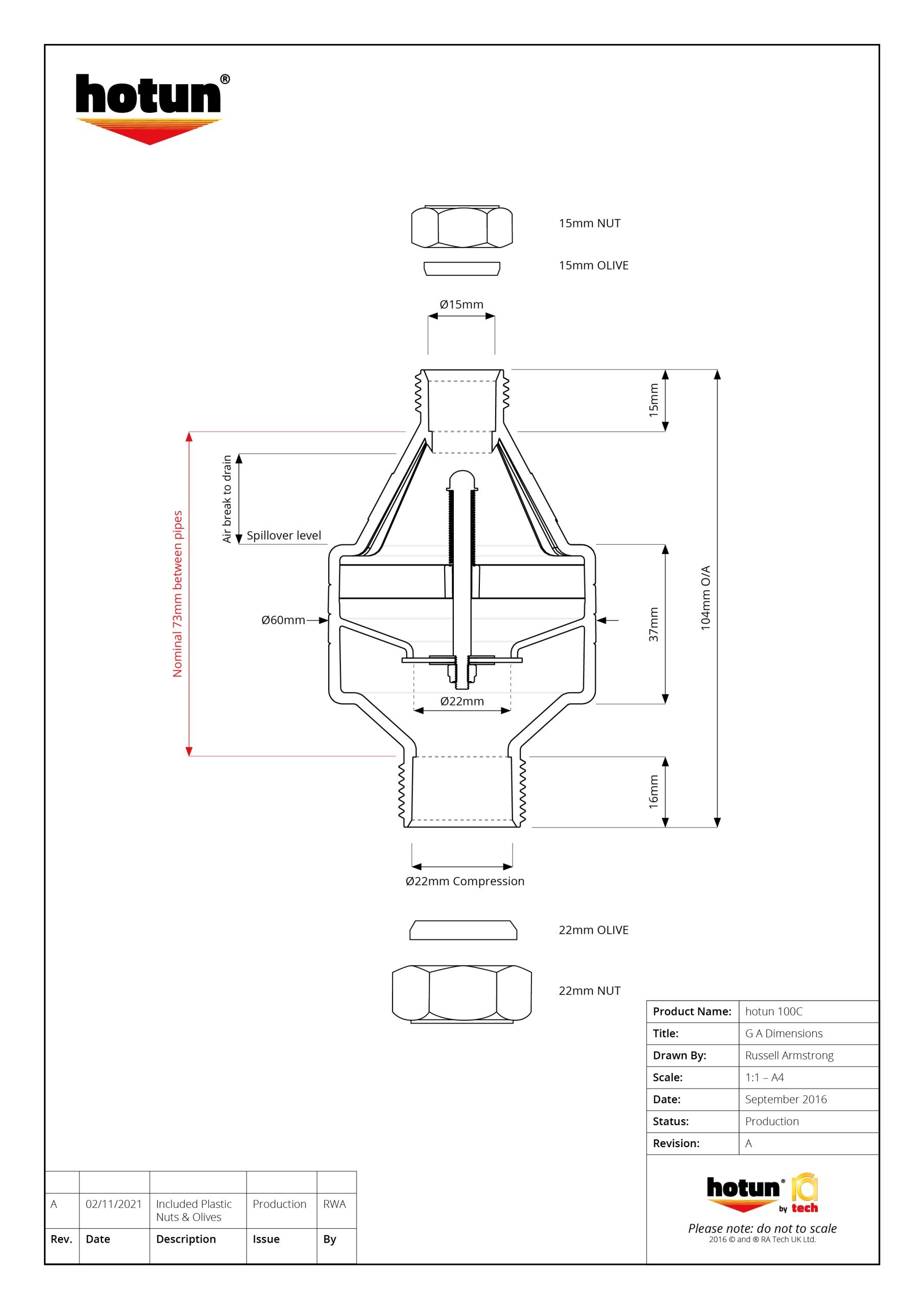
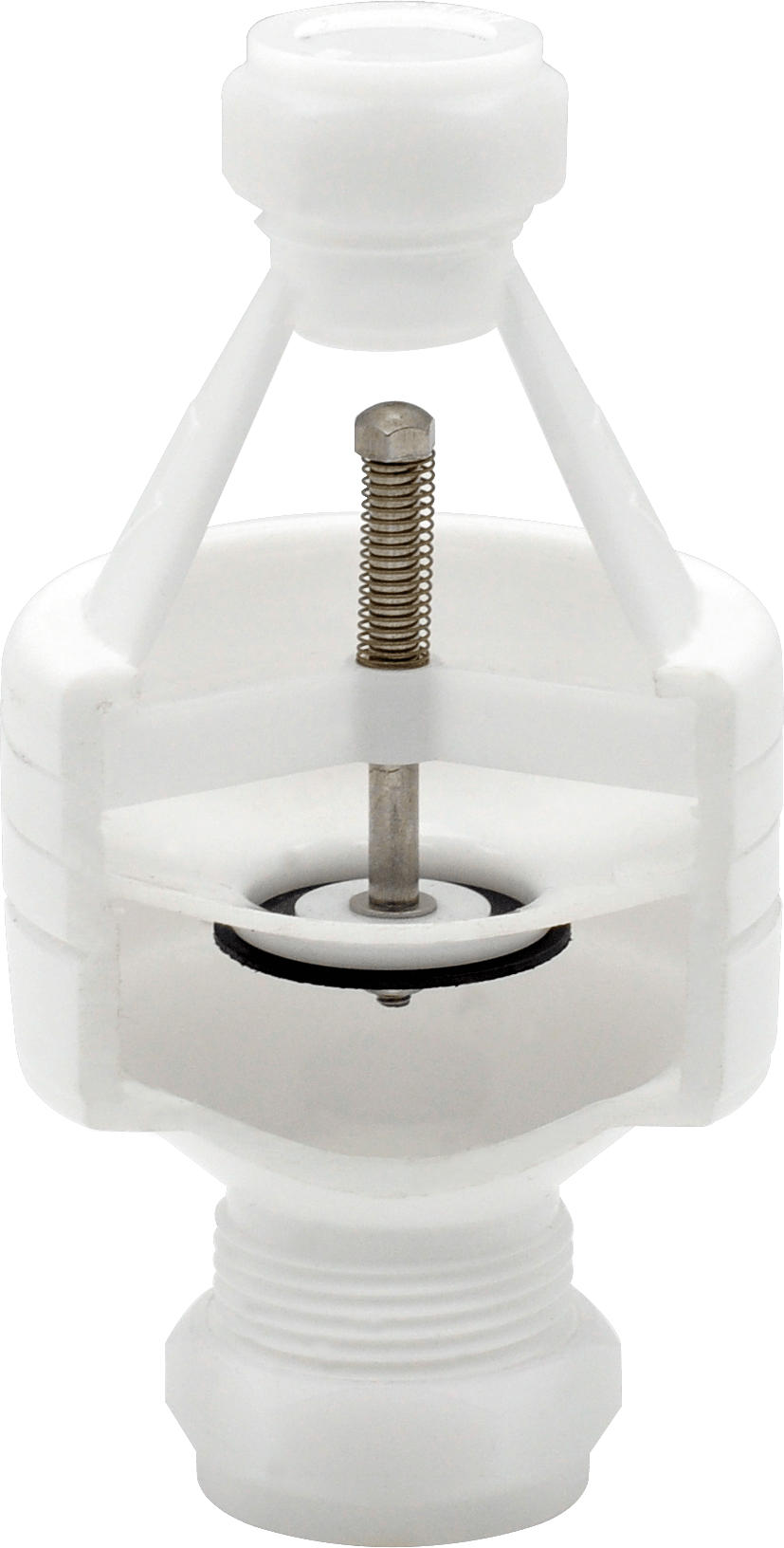
The hotun tundish achieves this using a patented sprung valve and diaphragm. This mechanism creates a reliable odour seal while still allowing discharged water to pass safely into the waste system.
The spring is carefully engineered and manufactured to close tolerances, ensuring the diaphragm remains shut to prevent foul air from entering the building, while still allowing a precise trigger point of between 5ml and 30ml of water. The tundish itself has a fill capacity of 50ml, ensuring consistent and reliable operation.
The hotun dry trap tundish combines:
- a visible tundish discharge point
- a dry trap odour barrier
- backflow and back-siphonage protection arrangement (vital for installations where otherwise, the category 5 drain water could contaminate the wholesome water in the cylinder)
This allows the discharge from a boiler or unvented cylinder relief valve to safely connect into a nearby waste pipe.
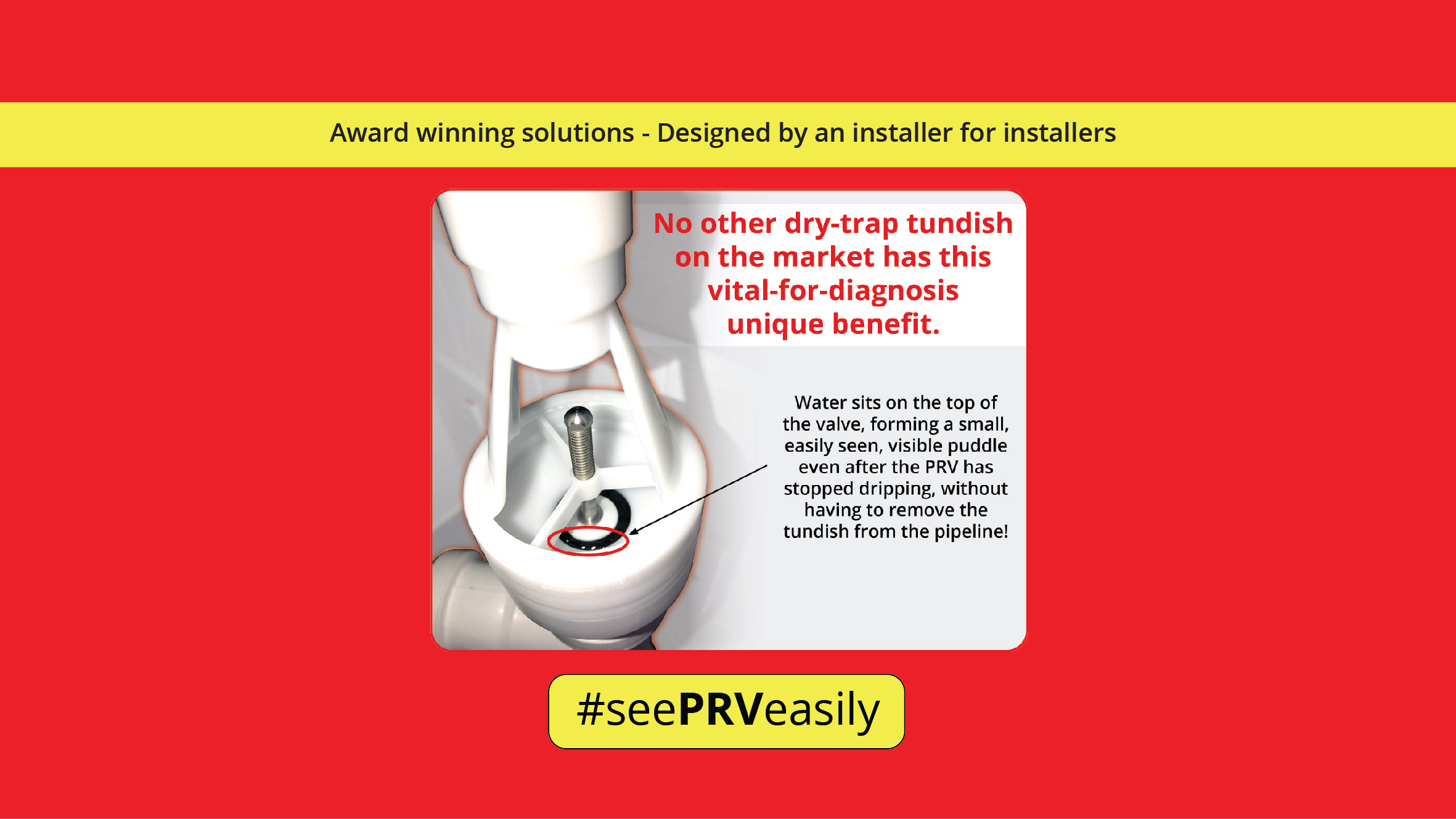
The design also retains a small amount of residual water after discharge, helping installers quickly diagnose if a relief valve has previously operated.
The Original hotun Dry Trap Tundish
The hotun was the first dry trap tundish developed specifically for boiler and unvented water heater installations. Invented and patented in 2014, it was designed by professional plumber Russell Armstrong to provide a simple and compliant solution for connecting (T)PRV discharge to waste pipe systems.
Today the hotun dry trap tundish is widely accepted by leading boiler and hot water cylinder manufacturers including:
- Worcester Bosch
- Vaillant
- Glow-worm
- Ideal
- Baxi
- OSO
- Ariston
- Vokera
This makes it a trusted solution for installers and specifiers across the UK.
You can read more about the development of the product on The hotun journey page
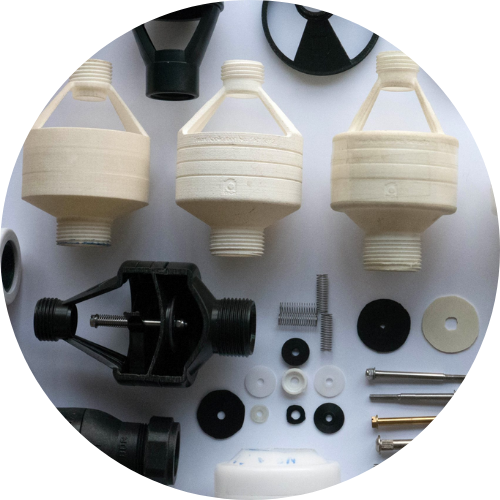

hotun Dry Trap Tundish Product Ranges
hotun tundishes are available in two main ranges designed to suit different installation preferences.
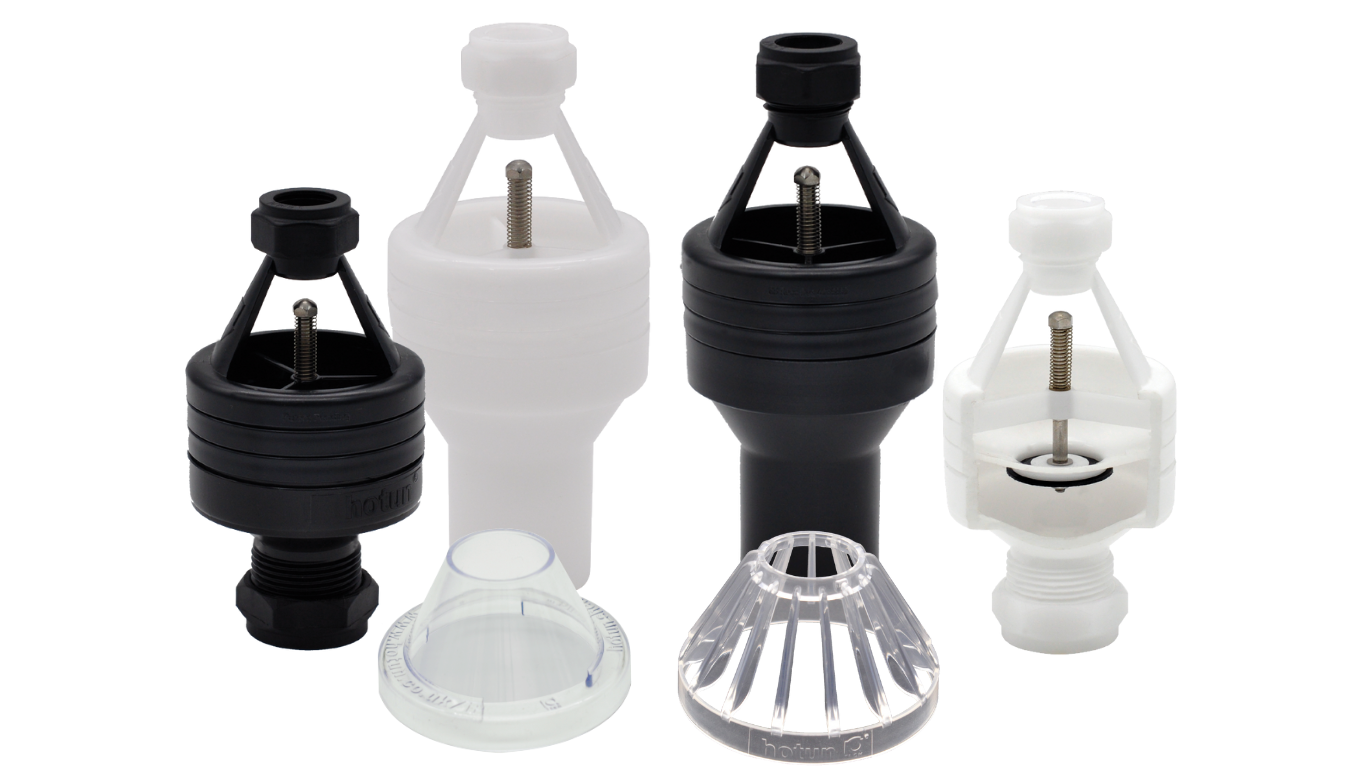
hotun 100C range
The hotun 100C range features a compression inlet connection, making it suitable for installations where a compression fitting is preferred.
View the hotun 100C dry trap tundish range.
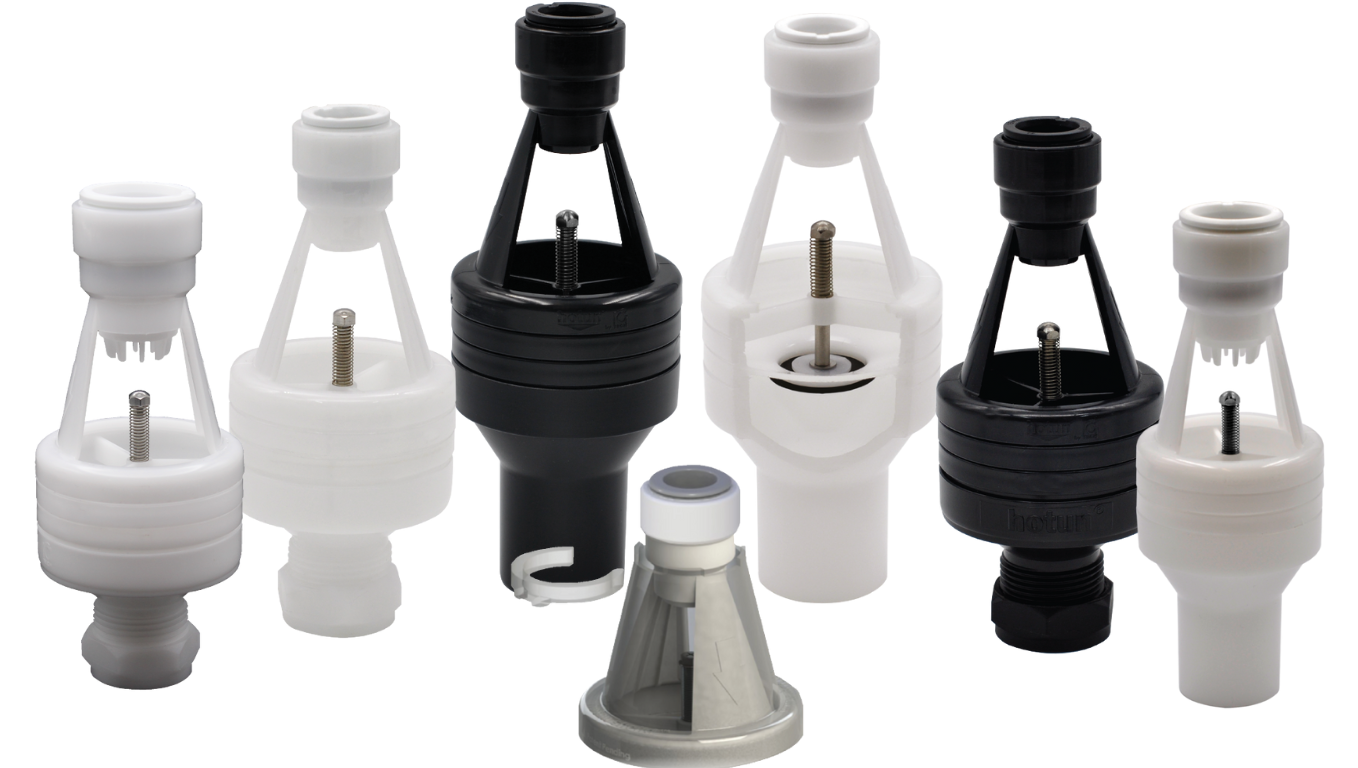
hotun SF range
The hotun SF range provides the same dry trap tundish protection but with a push-fit inlet connection for faster installation.
View the hotun SF dry trap tundish range.
Compliance and Regulations
Installing a dry trap tundish must comply with relevant UK Building Regulations and Water Regulations, including requirements for visible discharge and protection against contamination of wholesome water. For boilers, the standards for installation and discharge via a PRV is derived from BS 6798:2014
Tundish designs generally comply with BS EN 1717:2025 Protection against pollution of water intended for human consumption in potable water installations and general requirements for devices to prevent pollution by backflow.
More information about these requirements can be found on our Regulations applicable for compliance page.
Why choose the hotun Dry Trap Tundish?
The hotun dry trap tundish has been engineered to address the key challenges faced by installers and specifiers when connecting (T)PRV discharge to a waste pipe.
Unlike some alternative products, the hotun uses a patented sprung valve and diaphragm, providing a positive mechanical seal that has been proven to hold pressure and prevent the passage of foul odours.
The design also incorporates residual water retention, allowing installers to clearly identify when a relief valve has previously discharged. This has proved to be a valuable diagnostic feature not typically available with other solutions.
In addition, the hotun is designed to be serviceable in situ, reducing maintenance time and avoiding the need for full replacement.
Its compact form factor, offering one of the smallest between-pipe installation sizes available, makes it particularly suitable for installations where space is limited.
These combined features make the hotun dry trap tundish a reliable and practical solution for both installers,specifiers and for home owners interested in early problem diagnosis leading to saving hot water and therefore energy.
Dry Trap Tundish vs Alternative Solutions
| Feature | hotun Dry Trap Tundish | Typical Alternatives |
|---|---|---|
| Odour protection | Positive mechanical seal (patented valve & diaphragm) | Often reliant on design tolerances or passive seals |
| Pressure integrity | Proven to hold pressure and prevent odour transfer | Some designs fail pressure testing |
| Residual water retention | Retains visible residual water for diagnosis | No retained water, making fault diagnosis harder |
| Visibility of discharge | Clear and consistent visual indication | Limited or unclear visibility |
| Servicing | Fully serviceable in situ | Often non-serviceable or requires removal |
| Installation size | Compact design – smallest between-pipe footprint in its class | Larger units requiring more installation space |
| Compliance support | Designed for PRV discharge and regulatory compliance | May require additional considerations |
Dry Trap Tundish and Alarm FAQ’s
These frequently asked questions are designed to support specifiers, installers and homeowners in understanding how a dry trap tundish works, how the alarm unit helps improvement in the installation quality and how they support compliant installations.
FAQ’s for:
Specifiers;
Installers;
Plumbing Merchants;
Home Owners & Building Users
Specifiers FAQ’s
How does a hotun installation support compliance with the Water Supply (Water Fittings) Regulations 1999?
The Water Supply (Water Fittings) Regulations 1999 are based on five key principles (or “tenets”): the prevention of contamination, misuse, undue consumption, erroneous measurement and waste.
A hotun dry trap tundish supports compliance with these requirements in a number of ways.
Firstly, the tundish provides a visible discharge point, allowing any flow of water from a pressure relief valve (PRV) to be clearly seen. This helps installers, homeowners and building users identify when a system fault may be present, supporting the prevention of undue consumption and waste.
How does the hotun detect alarm contribute to Water Regulations compliance?
When used in conjunction with the hotun detect alarm unit, any discharge event is brought to the immediate attention of the homeowner or building user. This allows issues to be addressed quickly, further reducing the risk of ongoing water loss and unnecessary consumption.
Together, these features provide both a compliant discharge solution and an effective means of monitoring system performance in line with Water Regulations.
Does a hotun installation provide Category 5 backflow protection?
Yes. When installed correctly, the hotun dry trap tundish provides protection against backflow contamination and back-siphonage, including risks associated with Category 5 fluid (highest risk).
By incorporating a tundish (air gap) and a dry trap mechanism, the hotun ensures that contaminated water from the waste system cannot enter the wholesome water supply, supporting compliance with the Water Supply (Water Fittings) Regulations 1999.
Is a hotun installation compliant with UK Building Regulations and Water Regulations?
Yes. A hotun installation is designed to support compliance with relevant UK regulations when installed in accordance with manufacturer instructions.
It provides:
- a visible discharge point (as required for safety monitoring)
- protection against backflow contamination
- a safe method of connecting PRV discharge to a waste pipe
- Prevents the ingress of foul odours and gasses into the building
Further regulatory guidance can be found on the Regulations applicable for compliance page.
Can a tundish discharge be connected to a waste pipe?
Yes, provided that the correct solution is used. A dry trap tundish, such as hotun, allows a tundish discharge to connect safely to a local waste or soil pipe while preventing foul odours and maintaining compliance with both Building and Water Regulations.
Why specify a dry trap tundish instead of a traditional discharge route?
Traditional discharge routes often require pipework to terminate externally, which can be complex, costly and impractical in modern buildings.
A dry trap tundish allows internal discharge into a waste pipe while:
- maintaining compliance
- preventing foul odours
- simplifying installation
This makes it a practical and efficient solution for many applications.
What are the benefits of specifying the hotun detect remote unit?
The hotun detect remote unit provides an additional level of monitoring and notification for PRV discharge events, supporting both system performance and regulatory intent.
By remotely alerting occupants or responsible persons when water is passing through the tundish, the unit enables early identification of faults, helping to reduce the risk of ongoing discharge and associated undue consumption and waste, in line with the principles of the Water Supply (Water Fittings) Regulations 1999.
The remote unit is particularly beneficial in situations where the tundish may not be easily visible, such as:
- concealed or boxed-in installations
- plant rooms or service cupboards
- multi-occupancy or commercial buildings
By improving awareness and response time, the hotun detect remote unit helps ensure that discharge events are noticed, investigated and resolved promptly, supporting good system management and ongoing compliance.
Is the hotun dry trap tundish accepted by boiler manufacturers?
Yes. The hotun dry trap tundish is widely accepted by leading boiler and hot water cylinder manufacturers including Worcester Bosch, Vaillant, Glow-worm, Ideal, Baxi, OSO and Ariston.
Installers FAQ’s
Can I connect a PRV discharge directly into a waste pipe using hotun?
Yes. The hotun dry trap tundish is specifically designed to allow safe connection of a PRV discharge into a local waste pipe, while preventing foul odours and maintaining compliance when installed correctly.
Why can’t I use a standard wet trap instead?
Wet traps rely on a water seal which can evaporate over time. Because PRVs discharge infrequently, this seal can fail, allowing foul odours to enter the building.
A dry trap tundish uses a mechanical seal, which does not dry out, making it suitable for PRV discharge applications.
How does the hotun dry trap tundish prevent odours?
The hotun uses a patented sprung valve and diaphragm to create a mechanical odour seal. This remains closed under normal conditions to prevent foul air entering the building, but opens when water is discharged.
Can the hotun be serviced after installation?
Yes. The hotun dry trap tundish is designed to be serviceable in situ, allowing maintenance or inspection without removing the unit from the pipework.
How can I tell if a PRV has discharged?
The hotun retains a small amount of residual water after discharge, providing a clear visual indication that water has previously passed through the tundish.
When used with the hotun detect alarm unit, discharge events can also be brought to immediate attention.
What are the benefits of incorporating a hotun detect alarm unit to a tundish?
Adding an alarm unit to a tundish provides installers with a reliable way of ensuring that any PRV discharge is noticed and acted upon quickly. While a tundish offers a visible indication of discharge, it relies on the end user actually seeing it. An alarm unit removes this uncertainty by actively alerting the homeowner or building user, helping to identify faults earlier, reduce ongoing water loss and minimise the likelihood of call-backs.
What are the benefits of installing the hotun detect remote unit?
The hotun detect remote unit provides installers with a simple way to enhance the overall installation by adding remote monitoring of (T)PRV discharge events.
When water passes through the tundish, the unit alerts the homeowner or building user, ensuring that any discharge is noticed immediately, even if the tundish is not in a visible location.
This is particularly useful in installations where the tundish is:
- boxed in or concealed
- located in cupboards or plant rooms
- not regularly observed by the end user
By improving visibility of discharge events, the hotun detect remote helps:
- identify faults earlier
- reduce the risk of ongoing water discharge
- minimise potential call-backs
It also provides a straightforward value-added upgrade, allowing installers to offer a more complete and professional solution to their customers.
Plumbing Merchants FAQ’s
Why should I stock the hotun dry trap tundish?
The hotun dry trap tundish is the original patented solution for PRV discharge into a waste pipe and is widely recognised by installers and specifiers. Its strong brand awareness, combined with acceptance by major boiler and Unvented Hot Water Cylinder manufacturers, helps drive consistent demand and repeat sales through merchant counters.
What makes the hotun range easy to sell at the trade counter?
The hotun range solves a common installation problem — connecting PRV discharge safely to a waste pipe. This makes it an easy product for counter staff to recommend when installers are looking for a compliant and practical solution.
Clear product differentiation, including compression (100C) and push-fit (SF) inlet options, also allows merchants to quickly match the correct product to the installer’s needs.
Does stocking hotun help reduce returns or technical queries?
Yes. The hotun dry trap tundish is designed to provide a reliable mechanical odour seal using a patented valve and diaphragm. This reduces the risk of common issues associated with alternative solutions, such as odour ingress or failed installations, helping to minimise returns and technical support queries.
Is there an opportunity for upselling the hotun detect alarm unit?
Yes. The hotun detect alarm unit can be offered alongside the tundish, providing an additional layer of protection by alerting the homeowner or building user to discharge events.
The hotun detect alarm unit and hotun detect remote unit provide a clear and straightforward upsell opportunity alongside every hotun tundish sale.
Both products enhance the core installation by adding active monitoring of (T)PRV discharge, making them an easy recommendation for counter staff when discussing compliant and complete solutions with installers.
For merchants, this offers several key benefits:
- Increased basket value with a simple add-on product
- Easy to explain and recommend at the trade counter
- Clear customer benefit, helping installers justify the upgrade
- Reduced risk of call-backs, improving installer satisfaction
- Opportunity to offer a complete system, rather than a single component
The hotun detect alarm unit is ideal where the tundish is visible but may not always be noticed, while the hotun detect remote unit provides additional flexibility by allowing alerts to be located remotely, making it suitable for more complex or concealed installations.
Together, they provide merchants with a practical way to increase sales value while supporting installers in delivering a more robust and professional installation.
This creates a natural upsell opportunity while also enhancing the overall solution.
How does the compact design of the hotun dry trap benefit merchants and installers?
The hotun is designed with one of the smallest between-pipe installation sizes in its class. This makes it suitable for tight installation spaces and reduces the likelihood of installers needing alternative products, improving customer satisfaction and reducing product returns.
Does the hotun range support repeat business?
Yes. Once installers become familiar with the hotun solution, it is often specified again on future jobs due to its ease of installation, reliability and compliance benefits. This helps generate repeat purchases through merchant branches.
Is the product easy for installers to understand and use?
Yes. The hotun dry trap tundish provides a clear, visible discharge point and a simple installation concept, making it easy for installers to understand and use correctly without complex setup requirements.
How does hotun compare to alternative dry trap tundishes?
The hotun dry trap tundish was the original patented solution, and is engineered to provide:
- a positive mechanical odour seal
- proven pressure integrity
- residual water retention for diagnosis
- in-situ serviceability
- compact installation size
These features provide clear differentiation and make it easier for merchants to recommend with confidence.
Home Owners and Building Users FAQ’s
What does a dry trap tundish do?
A dry trap tundish safely carries water away from your boiler or hot water system if a safety valve operates, while preventing bad smells from entering your home.
Should I be concerned if I see water in the tundish?
Occasional discharge may indicate normal operation, but it can also be a sign that your system needs attention. If water is seen regularly, you should contact a qualified engineer.
What is the benefit of the hotun detect alarm?
The hotun detect alarm alerts you when water is passing through the tundish, helping you quickly identify potential issues and avoid ongoing water waste.
Does the hotun require maintenance?
No regular maintenance is typically required. However, it should be checked as part of routine system servicing by a qualified engineer.
General FAQ’s
What is a dry trap tundish?
A dry trap tundish is a plumbing device used to safely discharge water from boiler and unvented cylinder pressure relief valves (PRVs) into a waste pipe while preventing foul odours from entering the building. Unlike a traditional wet trap, it does not rely on a water seal, so it cannot dry out over time.
Can a (T)PRV discharge into a waste pipe?
Boilers
Yes, a PRV from a boiler can discharge into a waste pipe when a suitable solution, such as a hotun dry trap tundish is used. This provides a point of visibility, together with the very useful diagnostic function of the residual water being present after a discharge has occurred, indicating that there has been a problem with the system, and prevents foul odours from entering the building and ensures compliance with BS6798:2014
For boiler PRV discharges, the characteristic of the design of hotun means that water at these low flow rates will cool down by up to 20 °C [LINK to test clip when ready] so “heat rated” pipework would not normally be needed.
Unvented Hot Water Cylinders
Yes, a (T)PRV from an Unvented Hot Water Cylinder can also be discharged into a waste pipe but it is important to note that because discharges from an Unvented Hot Water Cylinder can be above 90 °C for extended periods of time, suitable waste pipework should be specified and used and will then be fully compliant (when installed correctly) with all UK Building and Water Regulations. See RA Tech Installation instructions for further guidance
Why can’t a wet trap be used on a PRV discharge?
Wet traps rely on a water seal to prevent foul air entering the building. Because pressure relief valves discharge infrequently, this water can evaporate over time, allowing foul odours from the drainage system to enter the building. For this reason, wet traps are not suitable for (T)PRV discharge applications.
Is a dry trap tundish compliant with UK regulations?
Yes, when installed correctly, a dry trap tundish can meet the requirements of UK Building and Water Regulations. It provides a visible discharge point and includes protection against backflow contamination and back-siphonage when connected to a waste pipe, thus allowing for a safe discharge not causing a danger to persons in or about the building
What is the difference between a dry trap tundish and a standard tundish?
A standard tundish provides a visible air gap for discharge, preventing back siphonage and backflow contamination protection, but does not prevent foul odours if connected directly to a waste pipe. A dry trap tundish includes an internal mechanism that prevents foul air from entering the building, allowing safe connection to a waste or soil pipe making the installation compliant with Building and Water Regulations.
What is the difference between the hotun 100C and hotun SF ranges?
The hotun 100C range features a compression inlet connection, making it suitable for installations where compression fittings are preferred. The hotun SF range uses a push-fit inlet connection, allowing for faster and simpler installation.
The 100C range is available in 15mm compression inlet connections, with 22/21.5 compression and 32mm pushfit/universal outlet sizes and the SF range is available with 15mm and 22/21.5mm pushfit inlet sizes and 22/21.5 compression and 32mm pushfit/universal outlets and in either black or white colour options.
Where can a dry trap tundish be used?
A dry trap tundish is typically used in:
- boiler installations
- unvented hot water cylinders
- (T)PRV and PRV discharge pipework
- internal discharge situations where external routing is impractical
- Cold water storage tank overflow connections
It is particularly useful where discharge pipework cannot easily be routed to the outside of a building.
How does a dry trap tundish prevent foul odours?
A dry trap tundish uses a carefully engineered and manufactured sprung operated mechanical seal rather than a water seal. In the case of hotun, this is achieved using a patented sprung valve and diaphragm, which remains closed to prevent foul air entering the building but opens when either a small amount of water is discharged or a full discharge happens (please select the correct capacity (LPM – Litres Per Minute) hotun, depending on the expected discharge flow rate from the appliance).
Does a dry trap tundish require maintenance?
As a dry trap tundish is a mechanical device, it should be checked for correct operation annually. With the hotun dry trap, this is easily achieved in-situ by pushing down on the valve arrangement to check for smooth operation of the valve, and if it requires cleaning at all, simply pull the valve mechanism up through the aperture, clean the rubber diaphragm and then push the valve back down through the aperture.
The hotun is the only dry trap tundish that allows the easy maintenance of the device in situ, and means it does not need to be removed from the pipeline to achieve this.
Maintenace of the hotun dry trap tundish can be done in seconds
Why is visible discharge important?
The Building Regulations (2015) and Water Regulations (1999) mandate that any discharging water be visible.
Visible discharge allows installers and homeowners to identify when a temperature and/or pressure relief valve has operated. This is an important safety feature, as it can indicate a fault or issue within the system that requires attention.
Fitting the hotun dry trap is also beneficial because of its unique and patented design means that after any discharge, a small amount of water is left in the bowl of the tundish (we call this residual water discharge). Therefore, the investigating homeowner or engineer can more easily confirm that water has passed through the tundish, either by sight or, more realistically, by touch.
The hotun dry trap is the only tundish on the market that has this helpful diagnosing feature with the product in situ, speeding up fault finding.
How do I contact you to talk about specific issues?
Where can I buy a hotun dry trap tundish from?
Take a look at our store locator, hotun products are available from all good plumbing merchants and are available from over.
Where can I find examples of hotun dry trap tundish instalaltions?
We proudly display examples of hotun dry trap tundish installations on our gallery page
Also known as
A dry trap tundish may also be referred to as:
-
PRV discharge tundish
-
boiler PRV discharge tundish
-
unvented cylinder tundish
-
tundish to waste pipe solution
-
tundish to drain connection
-
internal tundish discharge solution
-
pressure relief valve discharge tundish
-
tundish with odour trap
-
dry trap for tundish discharge